32 principles of jiu-jitsu pdf free
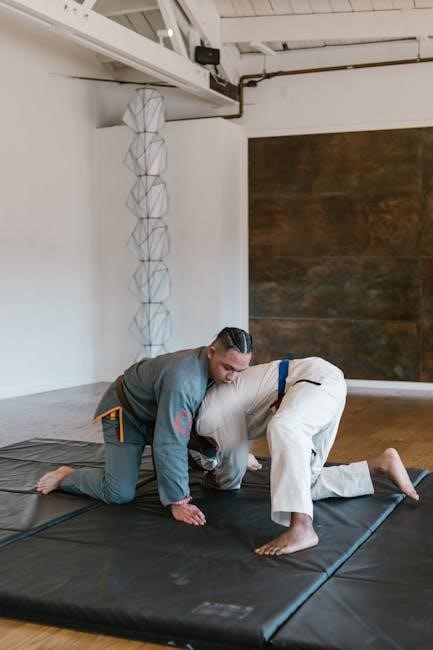
Jiu-Jitsu transcends mere self-defense, becoming a comprehensive lifestyle; it equips individuals with mental fortitude to navigate life’s challenges effectively and resiliently.
The Philosophy Behind Jiu-Jitsu
At its core, Jiu-Jitsu embodies a philosophy of efficiency, adaptation, and relentless pursuit of improvement. It’s a system built on the idea that a smaller, weaker person can defend against a larger, stronger aggressor by utilizing leverage, technique, and strategic positioning. This isn’t simply about physical prowess; it’s about intellectual understanding and mental discipline.
The art encourages humility, respect, and a constant willingness to learn. It’s a journey of self-discovery, where practitioners confront their limitations and strive to overcome them. Jiu-Jitsu fosters resilience, teaching individuals to embrace challenges and persevere through adversity – skills applicable far beyond the training mat, extending into all facets of life. It’s about problem-solving under pressure and maintaining composure in chaotic situations.
Jiu-Jitsu as a Life Skill – Beyond Self-Defense
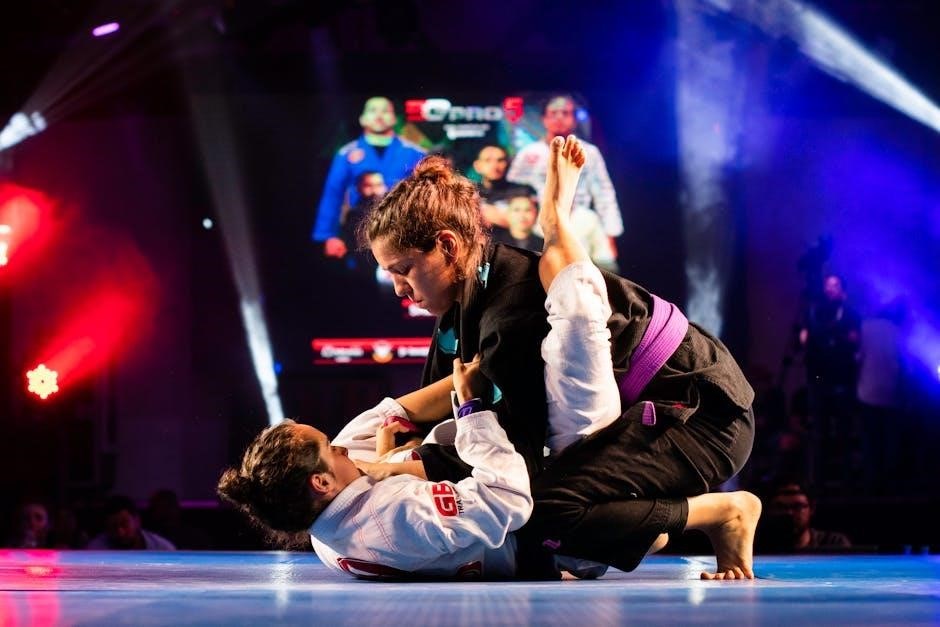
The benefits of Jiu-Jitsu extend far beyond the ability to defend oneself. It cultivates a mindset of proactive problem-solving, demanding strategic thinking and adaptability in dynamic scenarios. This translates directly into improved decision-making skills applicable to professional and personal life.
Furthermore, Jiu-Jitsu fosters discipline, perseverance, and emotional regulation. The consistent training builds mental toughness and the ability to remain calm under pressure. It instills confidence, not through aggression, but through competence and self-awareness. Learning to overcome physical and mental challenges on the mat builds resilience and a growth mindset, empowering individuals to tackle obstacles with greater fortitude and a positive outlook, ultimately enhancing overall well-being.
Core Principles: Leverage & Mechanics
Jiu-Jitsu prioritizes efficient movement and strategic positioning, emphasizing the skillful application of leverage and biomechanics over brute strength for optimal control.
Understanding Leverage in Jiu-Jitsu
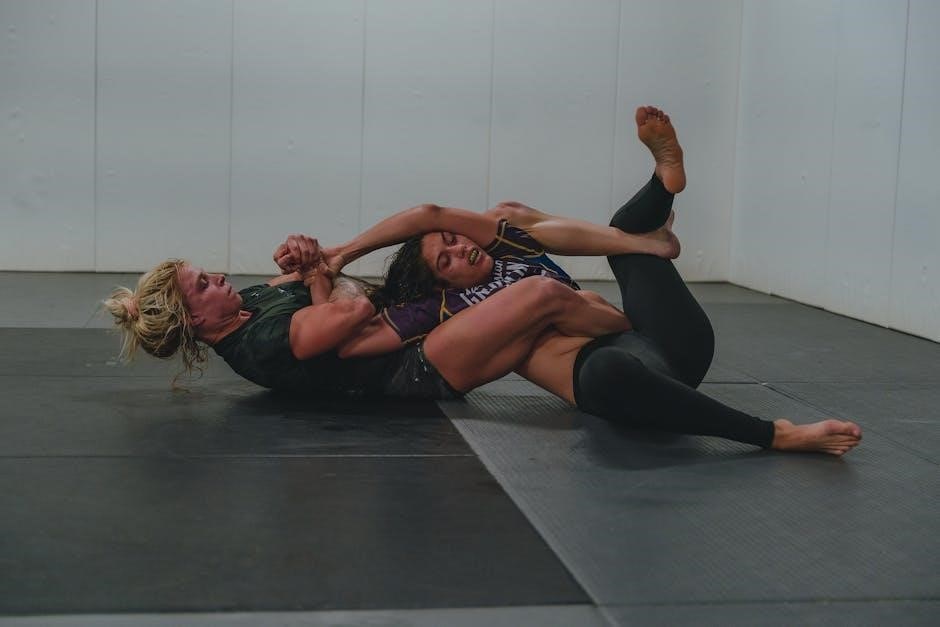
Leverage is the cornerstone of Jiu-Jitsu’s effectiveness, allowing a smaller, weaker individual to overcome a larger, stronger opponent. It’s about using angles and body positioning to amplify force, creating mechanical advantages. Think of a simple lever – a small effort applied at the right point can move a much heavier load.
In Jiu-Jitsu, this translates to controlling an opponent’s center of gravity, breaking their posture, and utilizing joint locks and chokes. Understanding how to create these leverage points is crucial. It’s not about matching strength, but about redirecting and controlling that strength. Proper leverage minimizes energy expenditure and maximizes control, making techniques far more efficient and accessible to all body types.
Mastering leverage requires a deep understanding of biomechanics and consistent practice to develop the necessary feel and timing. It’s a fundamental principle that underpins nearly every technique in Jiu-Jitsu.
Utilizing Body Mechanics for Efficiency
Efficient movement in Jiu-Jitsu isn’t about brute strength; it’s about intelligent body mechanics. This involves coordinating your entire body – from your feet to your hands – to generate maximum power with minimal effort. Think of it as a chain reaction, where each segment contributes to the overall effectiveness of the technique.
Proper body mechanics includes maintaining a strong base, using your hips and core to generate power, and transferring weight effectively. Avoiding unnecessary movements and focusing on smooth, fluid transitions are key. This not only conserves energy but also improves balance and control, making your techniques more difficult to defend against.
Developing efficient body mechanics requires conscious awareness and dedicated practice. It’s about learning to move with intention and precision, maximizing your leverage and minimizing wasted energy.
Positional Hierarchy & Control
Dominating positions are crucial in Jiu-Jitsu, dictating the flow of the match and creating opportunities for submissions or advantageous transitions consistently.
The Importance of Positional Dominance
Positional dominance forms the bedrock of a successful Jiu-Jitsu game, far exceeding mere strength or athletic ability. It’s about controlling space, limiting your opponent’s movement, and dictating the terms of engagement. A superior position inherently offers increased safety, allowing for strategic attacks and minimizing exposure to submissions.
Think of it as a hierarchy: mount is generally more dominant than side control, which is more dominant than guard. Each position presents unique advantages and disadvantages, demanding a nuanced understanding of control and transitions.
Securing and maintaining dominant positions isn’t simply about being “on top”; it’s about applying pressure, breaking posture, and establishing a framework for offensive and defensive maneuvers. It’s a proactive approach, consistently seeking to improve your position and limit your opponent’s options, ultimately leading to a higher probability of success.
Guard, Mount, and Back Control – Key Positions
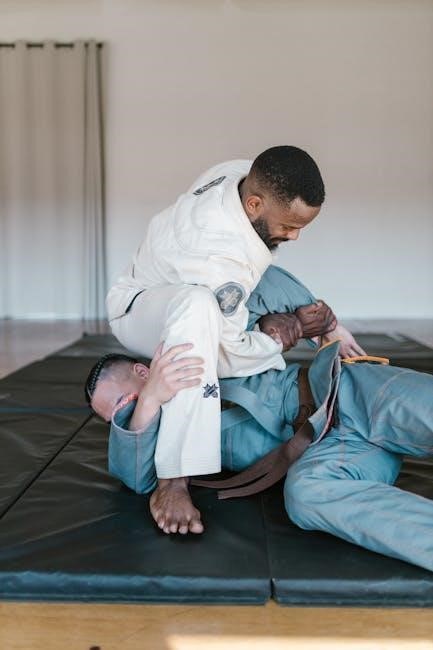
These three positions – Guard, Mount, and Back Control – represent fundamental cornerstones of Jiu-Jitsu, each offering distinct advantages and strategic pathways to victory. The Guard, from the bottom, allows for active defense, submission attempts, and sweeps, controlling distance and disrupting the opponent’s balance.
Mount, a dominant top position, provides immense control, enabling strikes (in applicable rulesets) and a high probability of submission attacks. It’s a powerful position to dictate the pace and pressure.
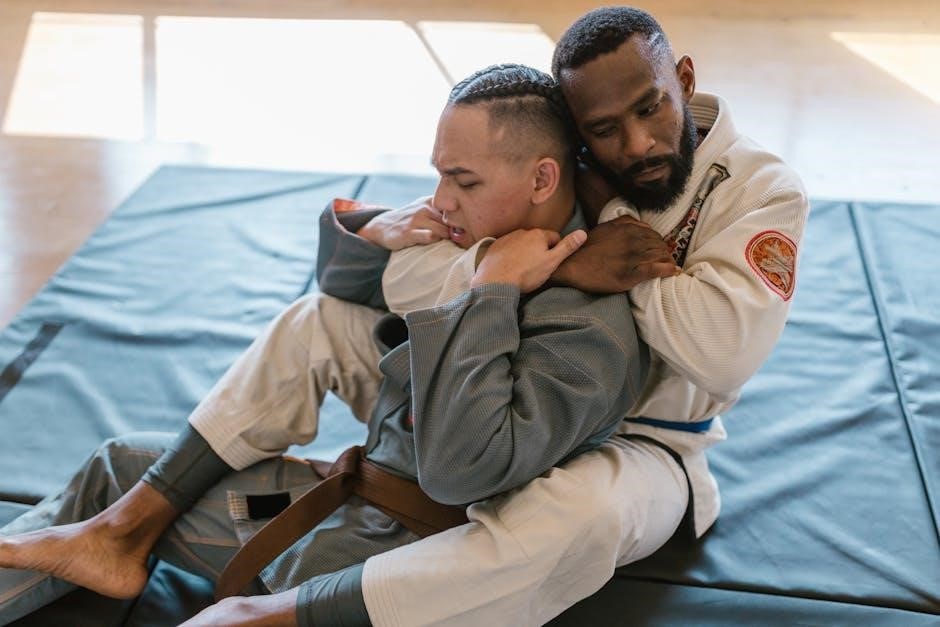
Finally, Back Control is often considered the most dominant position, offering unparalleled control and access to high-percentage submissions like the Rear Naked Choke. Mastering transitions between these positions, and understanding their nuances, is crucial for developing a well-rounded and effective Jiu-Jitsu game.
Principles of Submission
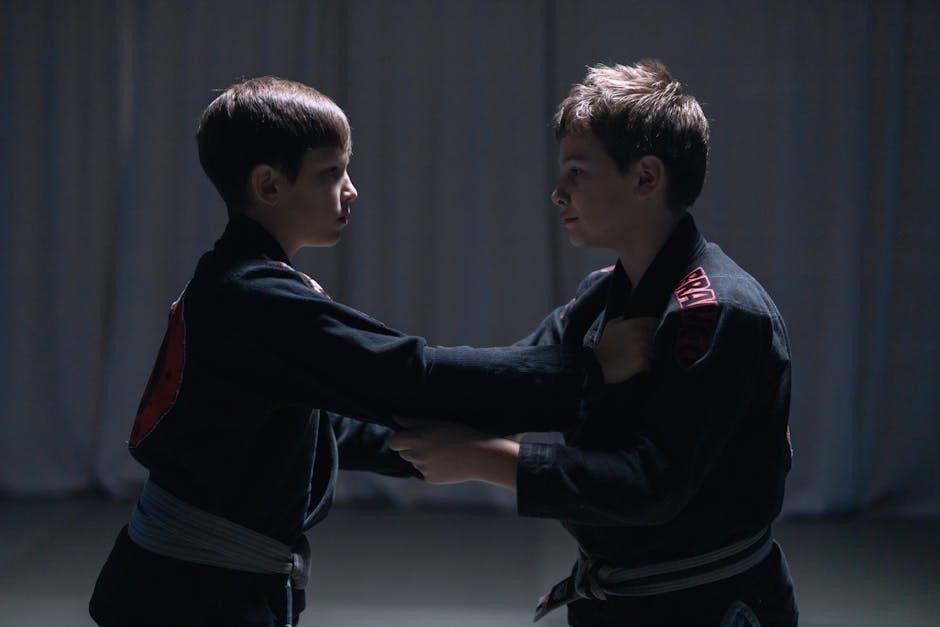
Submissions are the culmination of Jiu-Jitsu technique, utilizing leverage and precise application of force to compel an opponent to yield or submit.
Joint Locks: Armbars, Kimuras, and Omoplatas
Joint locks represent a core component of Jiu-Jitsu submissions, targeting vulnerable joints to create significant discomfort and compel an opponent to tap. The armbar, a classic technique, extends the elbow joint beyond its natural range, applying hyper-extension pressure.
Kimuras, focusing on the shoulder joint, utilize a figure-four grip to control and manipulate the arm, creating a powerful twisting force. Omoplatas, a shoulder lock applied from the guard, leverage body positioning and angles to isolate and control the opponent’s shoulder.
Successful application of these locks demands precise technique, proper body mechanics, and a deep understanding of anatomical leverage. Mastering these foundational joint locks is crucial for any aspiring Jiu-Jitsu practitioner, building a solid base for more advanced submission techniques.
Chokes: Rear Naked Choke, Guillotine, and Triangle Choke
Chokes are devastating submission techniques in Jiu-Jitsu, restricting blood flow to the brain, leading to rapid unconsciousness if not released. The Rear Naked Choke (RNC), executed from the back control position, utilizes the squeezing biceps to constrict the carotid arteries.
The Guillotine choke, applied from the front, wraps the arm around the opponent’s neck, applying pressure to the carotid arteries and trachea. Triangle Chokes, performed from the guard, use the legs to create a triangular shape around the opponent’s neck and shoulder, restricting blood flow.
Effective chokes require precise positioning, tight control, and understanding of anatomical vulnerabilities. These techniques are powerful tools, demanding responsible training and a commitment to safety.
The Concept of Off-Balancing
Disrupting an opponent’s base is crucial; off-balancing creates openings for sweeps, submissions, and positional advancements, fundamentally shifting control in Jiu-Jitsu.
Breaking Posture and Creating Imbalance
Establishing control begins with dismantling your opponent’s structure. Breaking their posture isn’t simply about forcing them downwards; it’s a strategic maneuver to disrupt their center of gravity and diminish their ability to generate power. A compromised posture limits their defensive options and opens pathways for offensive techniques.
This involves utilizing grips, pushes, and pulls to destabilize their spine, forcing them to react and expend energy defending. Once posture is broken, creating imbalance becomes significantly easier. This can be achieved through subtle shifts in weight, off-balancing movements, or exploiting their reactions to the postural break. Remember, a well-timed break in posture and subsequent imbalance sets the stage for effective sweeps and submission attempts, fundamentally altering the dynamic of the engagement.
Kuzushi: The Art of Off-Balancing
Kuzushi, a cornerstone of Jiu-Jitsu, translates to “breaking balance.” It’s not about brute strength, but rather a refined understanding of biomechanics and subtle manipulation of your opponent’s center of gravity. Effective Kuzushi involves disrupting their base, making them vulnerable to sweeps, takedowns, and submissions. This is achieved through precise movements, utilizing pushes, pulls, and circular motions to redirect their weight.
Mastering Kuzushi requires sensitivity and timing. You must anticipate your opponent’s reactions and exploit their attempts to regain stability. It’s a continuous process of feeling and responding, creating openings where none existed before. Successful Kuzushi isn’t a single action, but a series of interconnected movements designed to render your opponent helpless and control the engagement.

Principles of Escapes & Reversals
Escapes and reversals demand spatial awareness, utilizing techniques like shrimping and hip escapes to create distance and reclaim a favorable position.
Creating Space and Regaining Guard
Successfully escaping dominant positions hinges on intelligently creating space, disrupting your opponent’s balance and structure. This isn’t about brute strength, but rather precise movements and understanding angles. Regaining guard is paramount; it’s a safe haven from which to initiate attacks or further escapes.
Techniques like framing – using your arms and legs to establish distance – are crucial. Simultaneously, focus on hip movement, specifically shrimping, to generate angles and break your opponent’s posture. A strong guard isn’t merely a defensive posture; it’s a proactive position offering numerous offensive opportunities. Prioritize establishing a solid base and controlling the distance to effectively transition back to guard and neutralize the threat.
Shrimp and Hip Escapes – Fundamental Movements
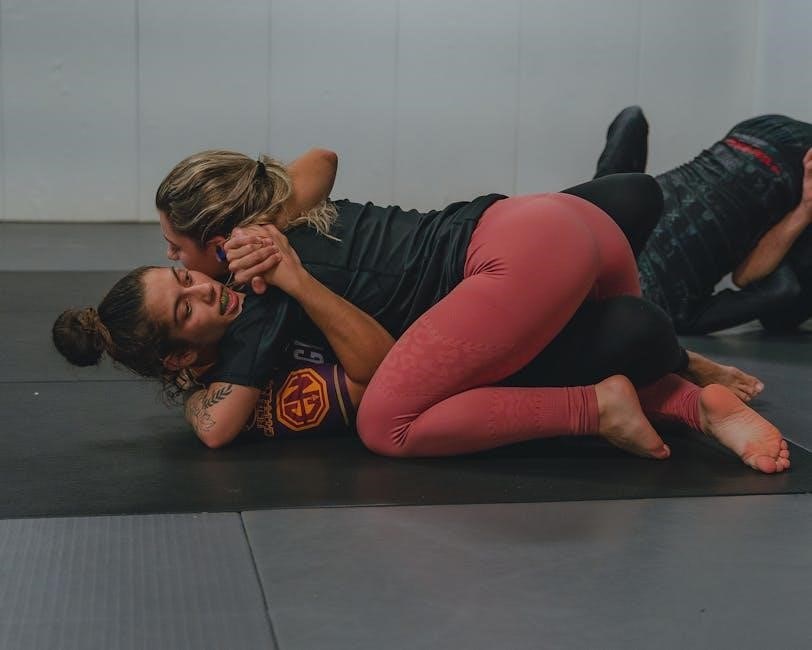
Shrimping and hip escapes are the bedrock of effective movement in Jiu-Jitsu, enabling escapes from precarious positions and facilitating positional advancements. These aren’t isolated techniques, but rather fundamental movements woven into nearly every aspect of the art. Mastering them unlocks a greater degree of freedom and control on the mat.
The shrimp involves creating space by extending a leg and driving with the hips, while the hip escape utilizes a similar principle to rotate away from pressure. Consistent practice builds muscle memory and allows for instinctive reactions. These movements aren’t about power, but about leverage and efficient body mechanics, allowing even smaller individuals to overcome larger opponents. They are essential for survival and thriving in Jiu-Jitsu.

Breathing & Relaxation in Jiu-Jitsu
Controlled breathing and relaxation are paramount, enhancing performance and conserving energy; they allow practitioners to remain calm under pressure and move efficiently.
Controlling Breath for Performance
Deep, diaphragmatic breathing is fundamental to Jiu-Jitsu performance, acting as a powerful tool for managing physiological responses to stress. Consciously regulating your breath allows for increased oxygen intake, fueling muscles and enhancing endurance during intense grappling.
Furthermore, controlled exhalation facilitates relaxation, reducing tension and improving fluidity of movement. Holding your breath creates rigidity, hindering technique and accelerating fatigue. Synchronizing breath with movement – exhaling during exertion and inhaling during recovery – optimizes power and efficiency.
This mindful approach extends beyond the physical; it cultivates mental clarity and focus, enabling practitioners to remain composed and make strategic decisions even under duress. Ultimately, mastering breath control is not merely about physical conditioning, but about achieving a harmonious state of mind and body;
Relaxation as a Key to Efficiency
Paradoxically, relaxation is a cornerstone of effective Jiu-Jitsu. While demanding physical exertion, true power stems from minimizing unnecessary tension. A relaxed body moves with greater fluidity, allowing for quicker reactions and more efficient technique execution. Muscle tension restricts range of motion and drains energy rapidly.
Learning to identify and release tension – in the shoulders, hips, and grip – is crucial. This isn’t about becoming passive, but about maintaining a state of ‘relaxed alertness’. It allows you to absorb an opponent’s force, redirect their energy, and capitalize on openings.
Cultivating relaxation requires conscious effort and consistent practice, ultimately leading to improved stamina, precision, and a more adaptable grappling style. It’s a subtle yet profoundly impactful element of mastery.
Finding & Utilizing Grips
Strategic grips are fundamental to controlling opponents, dictating movement, and setting up submissions; mastering grip fighting is essential for establishing dominance.
Grip Fighting – Establishing Control
Grip fighting is a constant, dynamic struggle for dominance, a subtle yet crucial aspect of Jiu-Jitsu often overlooked by beginners. It’s not simply about having a grip, but about the quality, timing, and intention behind it. A strong grip can dictate the pace and direction of the exchange, disrupting your opponent’s balance and opening opportunities for attacks.
Effective grip fighting involves breaking your opponent’s grips while simultaneously establishing your own. This requires understanding leverage, hand positioning, and anticipating their movements. Common strategies include using your body weight to reinforce your grips, isolating limbs to prevent them from establishing control, and utilizing grip breaks to create openings.
Ultimately, successful grip fighting isn’t about brute strength, but about finesse, timing, and a deep understanding of biomechanics. It’s a continuous process of feeling, reacting, and adapting, laying the groundwork for positional control and submission opportunities.
Common Jiu-Jitsu Grips and Their Applications
Several fundamental grips form the foundation of Jiu-Jitsu control and attacks. The collar grip, often used for controlling posture and setting up throws or submissions, is a staple. Sleeve grips provide excellent control over the limbs, enabling sweeps and transitions. Belt-level grips disrupt balance and facilitate takedowns, while pant grips offer leverage for controlling movement.
Each grip has specific applications. A cross-collar grip can lead to a lapel choke, while a sleeve grip combined with a collar grip can set up an armbar. Understanding how to combine grips is crucial; layering grips increases control and limits your opponent’s options.
Mastering grip transitions – breaking one grip to establish another – is equally important. Grip fighting isn’t static; it’s a dynamic exchange requiring constant adaptation and refinement. Effective grip usage is a cornerstone of successful Jiu-Jitsu.
The Role of Timing & Patience
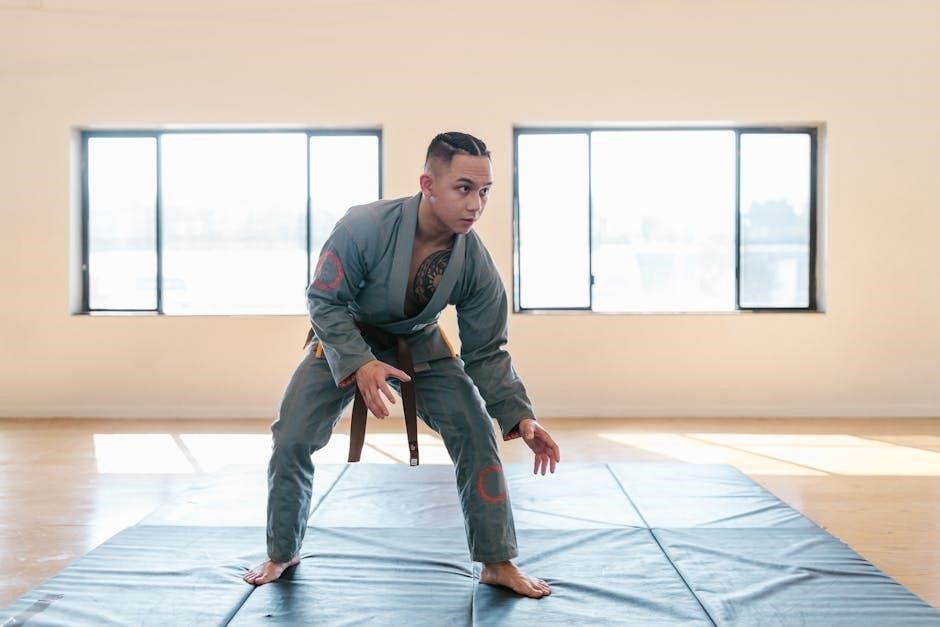
Jiu-Jitsu rewards astute observation and calculated action; recognizing openings and executing techniques with precise timing are paramount for success on the mat.
Recognizing Opportunities for Attacks
Developing the ability to identify vulnerabilities in an opponent’s defense is crucial in Jiu-Jitsu. This isn’t about brute force, but rather a keen awareness of posture, balance, and grip fighting dynamics. A slight shift in weight, a compromised grip, or an exposed limb can signal an opening for a submission or positional advancement.
Successful practitioners cultivate a patient mindset, avoiding impulsive reactions. Instead, they methodically analyze their opponent, waiting for the opportune moment to strike. This requires diligent drilling of techniques and sparring, fostering an intuitive understanding of movement and reaction patterns. Recognizing these subtle cues allows for efficient and effective attacks, maximizing the impact of your efforts and minimizing wasted energy.
Ultimately, capitalizing on openings isn’t just about seeing them, but also about having the technical skill and composure to exploit them decisively.
The Importance of Patience in Jiu-Jitsu
Jiu-Jitsu is often described as a game of chess, demanding strategic thinking and a measured approach. Rushing attacks or forcing submissions rarely yields positive results; instead, it often leads to exhaustion and vulnerability. Patience allows you to conserve energy, observe your opponent’s reactions, and identify weaknesses in their defense.
Cultivating patience involves resisting the urge to constantly move and attack. It’s about controlling your impulses and waiting for the right moment to capitalize on an opening. This requires mental discipline and a deep understanding of positional hierarchy. A solid foundation and controlled movements are far more effective than frantic attempts at submission.
True mastery in Jiu-Jitsu comes from understanding that the journey is as important as the destination, and patience is a vital component of that journey.


Leave a Reply
You must be logged in to post a comment.